
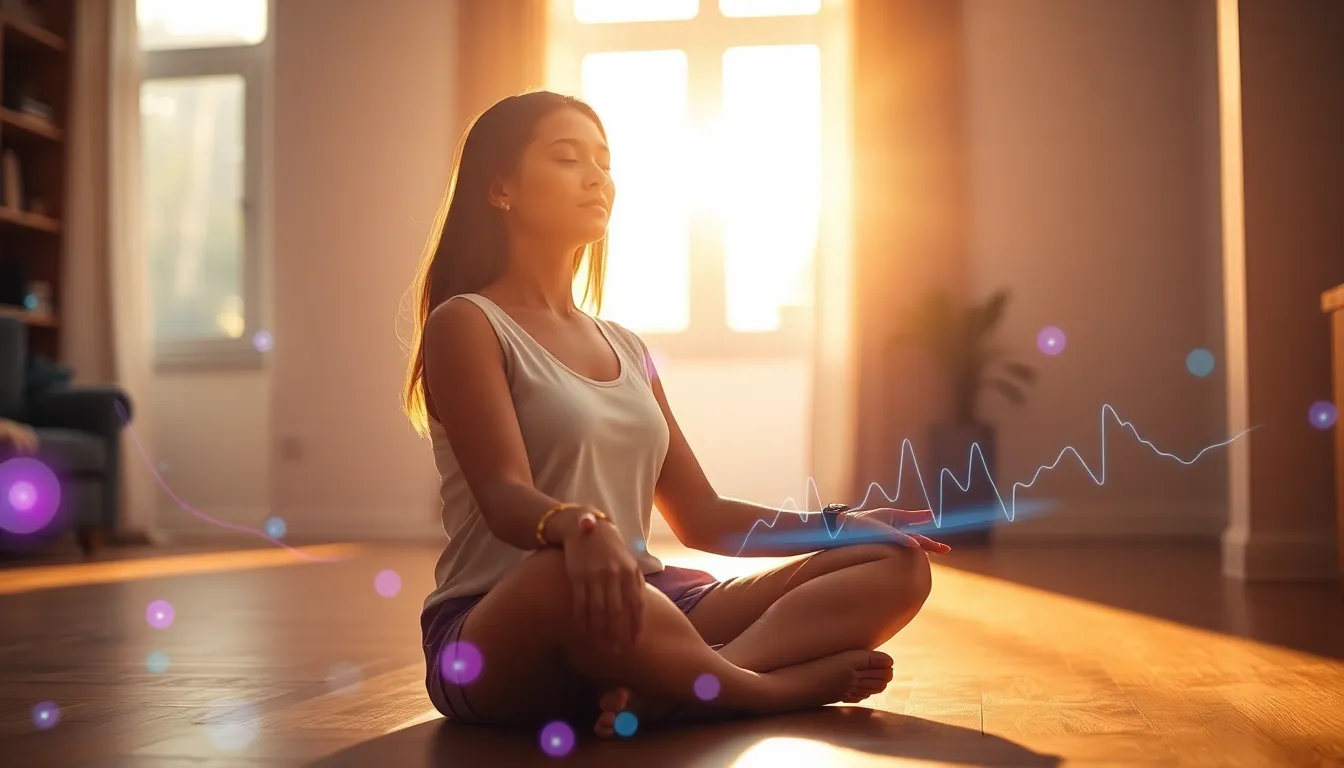
The Benefits of Meditation for Mental Wellbeing
Feeling overwhelmed by the constant ping of notifications, the endless to-do lists, and the general noise of modern life? You’re not alone. So many of us feel like we’re just trying to keep our heads above water, constantly reacting to things rather than living intentionally. It’s easy to get caught up in the spin cycle of worry, stress, and a general feeling of being a bit scattered. But what if there was a simple, accessible practice that could help you find a bit more calm, clarity, and resilience amidst it all? That’s where meditation comes in. It’s not some mystical practice reserved for monks on mountaintops; it’s a practical tool for anyone looking to improve their mental wellbeing. Think of it as training for your brain, helping you to become more aware of your thoughts and feelings without getting swept away by them. It can seem a bit daunting at first, like learning any new skill, but the payoff for your mental health can be pretty significant. This article is going to talk about some of the real, tangible benefits you can experience by bringing a little bit of mindfulness into your life.
Understanding the Stress Response and Meditation’s Role
Let’s be honest, stress is a huge part of modern living. Our bodies have this built-in “fight or flight” response, which is super useful when you’re actually facing danger – like a saber-toothed tiger (though, thankfully, most of us don’t have those roaming around). But in our daily lives, this system gets triggered by things like traffic jams, demanding bosses, or even just a scary news headline. When that happens, your body pumps out stress hormones like cortisol and adrenaline. This isn’t great if it happens all the time. Chronic stress can really mess with your physical and mental health. It can lead to anxiety, depression, sleep problems, and a whole host of other issues. It makes your mind race, your muscles tense up, and it’s just exhausting. So, how does meditation fit into this? Well, when you meditate, especially techniques that focus on breathing or body sensations, you’re actually helping to calm down that overactive stress response. It’s like sending a gentle “all clear” signal to your nervous system. You’re not necessarily getting rid of the stressors themselves – the deadlines will still be there – but you’re changing your *reaction* to them. You’re building up your ability to stay more grounded even when things feel chaotic. It’s about creating a buffer zone between the trigger and your response. So, how do you actually start doing this? A really simple way is just to focus on your breath for a few minutes. Sit comfortably, close your eyes if you want to, and just pay attention to the feeling of the air coming in and going out. When your mind wanders – and it *will* wander, that’s totally normal – just gently guide your attention back to your breath. That’s it. That’s the practice. It might feel a bit silly at first, and you might think, “Am I even doing this right?” To be fair, that’s a common thought. The biggest misconception is that you have to “empty your mind.” Nope. You just have to notice your thoughts without getting caught up in them. It’s more about awareness than achieving some blank slate. Small wins here are noticing when your mind wanders and gently bringing it back. That’s a win! Every single time you do that, you’re strengthening that mental muscle.
A common challenge people face when they start is consistency. It’s easy to meditate for a few days and then let it slide. Life gets busy, right? Another tricky part can be dealing with uncomfortable emotions that might surface. When you quiet the mental chatter, sometimes deeper feelings can come up. It’s important to remember that meditation isn’t about suppressing emotions; it’s about learning to observe them without judgment. If difficult feelings arise, a good tool is to acknowledge them – “Ah, there’s anxiety” – and then gently return your focus to your breath or body. It’s okay if it feels intense sometimes. Think of it like dipping your toes into a pool; you don’t have to dive right into the deep end. Start with short sessions, maybe just 5 minutes. Use guided meditations if that helps; there are tons of free apps and online resources like Calm, Headspace, or Insight Timer. These can guide you through the process, which makes it less intimidating. What people often get wrong is thinking they need a special quiet place or a long chunk of time. Honestly, you can meditate for a few minutes in your car, at your desk, or even while waiting in line. It’s about finding moments, not perfection. The goal isn’t to stop thinking – that’s pretty much impossible for most of us! It’s to become aware that you are thinking, and to not let those thoughts run the show. This practice, over time, can profoundly impact how you handle stress, leading to a greater sense of calm and control.
Boosting Emotional Regulation and Resilience
Ever feel like you’re on an emotional rollercoaster, swinging from feeling great to feeling terrible without much warning? That’s pretty normal, but meditation can seriously help you find a more even keel. One of the core benefits is how it improves your ability to regulate your emotions. What does that actually mean? Well, it means you become less reactive. Instead of instantly snapping when someone annoys you, or spiraling into worry when something goes wrong, you develop the capacity to pause, observe what’s happening inside you, and then choose a more considered response. This is huge for mental wellbeing because it means you’re not at the mercy of every passing feeling. Think about it – if you can learn to manage your frustration better, or not let anxiety take over your entire day, you’re going to feel a lot more in control of your life. Meditation, particularly mindfulness meditation, trains you to notice your emotions as they arise without immediately identifying with them. You learn to see them as temporary states, like clouds passing in the sky, rather than the whole sky itself.
So, how do you cultivate this? It starts with self-awareness. When you meditate regularly, you begin to notice the subtle physical sensations that often accompany emotions – maybe a tightness in your chest when you’re anxious, or a warmth in your face when you’re embarrassed. By tuning into these bodily signals, you can often catch an emotion before it fully takes hold. It’s like having an early warning system. A practical tool here is a simple body scan meditation. You lie down or sit comfortably and systematically bring your attention to different parts of your body, noticing any sensations without judgment. It helps you connect with your physical self and understand how emotions manifest. What people sometimes get wrong is thinking that emotional regulation means suppressing feelings. That’s not it at all. It’s about acknowledging the feeling, understanding it, and then not letting it dictate your actions. It’s a more skillful way of being with your emotions. A common challenge is the urge to distract yourself when uncomfortable feelings pop up during meditation. Resist that urge. The practice is precisely about learning to sit with what’s there, even if it’s unpleasant. Small wins in this area are noticing a negative emotion coming up and, instead of immediately reacting or pushing it away, taking a breath and observing it for a moment. That’s a significant step!
Building resilience is another massive benefit. Resilience isn’t about never facing difficulties; it’s about your ability to bounce back when you do. Meditation helps you build this inner strength. By practicing acceptance and non-judgment towards your thoughts and feelings, you become more adaptable. You learn that difficult experiences don’t have to define you. You can experience sadness, disappointment, or stress, and still come out the other side, perhaps even stronger. It’s like building up your mental and emotional muscles. When you’re regularly engaging in a practice that requires patience and non-reactivity, you’re essentially conditioning yourself to handle life’s inevitable ups and downs with more grace. This doesn’t mean you’ll suddenly become immune to hardship, but your capacity to cope will increase. The tricky part can be when you’re going through a really tough time in your life. In those moments, meditating might feel harder than ever. But it can also be precisely when it’s most needed. Even a few minutes of focused breathing can offer a moment of respite and help you regain a sense of composure. Remember, the goal isn’t to feel happy all the time; it’s to feel more capable of handling whatever life throws your way, with a greater sense of inner peace.
Improving Focus, Concentration, and Cognitive Function
Do you ever feel like your attention span is just a few seconds long? You try to read an article, but your mind drifts to your grocery list. You sit down to work, and suddenly you’re thinking about what you’ll have for dinner. It’s a common experience in our hyper-stimulated world. Meditation, however, is like a workout for your attention muscle. By regularly practicing focusing on a single point, like your breath, a mantra, or a sensation, you’re actively training your brain to stay present and resist distractions. This improved focus isn’t just about being better at tasks; it has wider implications for your cognitive function. Studies have shown that regular meditation can lead to changes in brain structure and function, particularly in areas related to attention, self-awareness, and emotional regulation. So, it’s not just a feeling of being calmer; there are actual physiological changes happening.
How does this happen in practice? Well, think of each moment your mind wanders during meditation as an opportunity. When you notice your mind has drifted off – maybe to a worry about an upcoming meeting or a memory from yesterday – and you gently guide your attention back to your anchor (like your breath), you are literally strengthening the neural pathways associated with focus. It’s like doing reps at the gym. The more you bring your attention back, the stronger that ability becomes. A common tool to aid this is simply setting a timer for your meditation session. Start with 5 or 10 minutes. The timer removes the pressure of needing to meditate for a long time. You just need to focus for those short bursts. What people often get wrong is expecting immediate, dramatic results. You won’t suddenly become a productivity guru overnight. The improvements in focus are gradual. Small wins are noticing that you’re able to sustain your attention for a few seconds longer than usual, or that you catch yourself drifting off sooner. These small moments build momentum.
Where it gets tricky is when distractions feel overwhelming. Sometimes, especially if you’re in a noisy environment or your mind is particularly busy, it can feel impossible to focus. In these moments, it’s important to be kind to yourself. You can try acknowledging the distraction without judgment. For example, if a loud noise interrupts your focus, you might simply notice “Loud noise” and then gently return to your breath. It’s not about eliminating distractions, but about changing your relationship to them. You become less easily pulled away by them. Another aspect of cognitive function that meditation can influence is working memory – the ability to hold and manipulate information in your mind. Better focus naturally leads to better memory recall and processing. This can impact everything from your ability to learn new things to your performance at work or school. It’s about cultivating a more settled, clear mind, which is a powerful tool for navigating complex tasks and making better decisions. The ultimate goal isn’t to achieve a perfect state of concentration, but to develop a more flexible and resilient attention that can be directed where you want it to go, when you want it to go there.
Reducing Symptoms of Anxiety and Depression
Let’s talk about anxiety and depression, two conditions that affect so many people and can really diminish quality of life. While meditation is not a replacement for professional medical treatment, it is a powerful complementary practice that can significantly help manage the symptoms. For someone experiencing anxiety, the mind often races with “what ifs” and worst-case scenarios. It feels like being trapped in a loop of worry, often with physical symptoms like a racing heart, shallow breathing, and muscle tension. Meditation offers a way to step out of that loop. By practicing mindfulness, you learn to observe these anxious thoughts without believing them or getting carried away by them. You start to see that thoughts are just thoughts – mental events – not necessarily truths about reality. This detachment can be incredibly liberating.
How can you start using meditation to help with anxiety? A simple technique is focusing on the breath. When you feel anxious thoughts starting to build, consciously bring your attention to the physical sensation of breathing. Feel the air entering your nostrils, filling your lungs, and then leaving your body. Each exhale can be an opportunity to release tension. When your mind wanders back to anxious thoughts (which it will, that’s what anxious minds do!), gently, without judgment, guide your attention back to your breath. The key here is the non-judgmental return. You’re not failing if you get distracted; you’re succeeding every time you notice the distraction and gently redirect your focus. What people often get wrong is expecting meditation to instantly make their anxiety disappear. It’s more of a gradual process. Think of it as building up a tolerance. Each time you practice observing anxious thoughts and returning to your anchor, you’re strengthening your ability to handle them. Small wins include noticing that you’re able to tolerate a few more seconds of anxious thinking before getting swept away, or that you remember to use your breath as an anchor even when you’re not formally meditating.
For depression, the experience can be very different, often involving persistent low mood, lack of interest, fatigue, and feelings of hopelessness. While the racing thoughts of anxiety might be more outwardly apparent, depression can involve a kind of mental fog or rumination on negative experiences. Meditation can help by cultivating a greater sense of present-moment awareness. When you’re caught in depressive thought patterns, you might be dwelling on the past or catastrophizing about the future. Mindfulness helps anchor you in the “now,” which can be a welcome break from these distressing thought cycles. It can also help increase self-compassion, which is often lacking in depression. The practice encourages a kinder, more accepting attitude towards oneself. The tricky part with depression is motivation. When you’re feeling depressed, the energy to do anything, let alone meditate, can be incredibly low. In these instances, even a minute or two of focused breathing can be beneficial. Don’t aim for perfection; aim for connection, however brief. Acknowledging that you’re struggling and still making a small effort to be present is a huge act of self-care. Tools like loving-kindness meditation, which involves cultivating feelings of warmth and goodwill towards oneself and others, can be particularly helpful in combating feelings of self-criticism often associated with depression. Remember, consistency, even in small doses, is more important than intensity when it comes to managing these conditions. It’s about building a practice that supports your mental health over the long term.
Quick Takeaways
- Meditation calms your body’s stress response, making you less reactive to daily pressures.
- It trains you to notice emotions without being overwhelmed by them, improving emotional control.
- Regular practice builds resilience, helping you bounce back from difficult experiences.
- Meditation acts like a workout for your attention, improving focus and cognitive function.
- It can help manage symptoms of anxiety by observing thoughts without judgment.
- For depression, it anchors you in the present and can foster self-compassion.
- Consistency, even for a few minutes daily, is key for long-term benefits.
Conclusion
So, we’ve talked about how meditation isn’t some fringe activity but a practical tool for navigating the ups and downs of life. It helps quiet the noise, both external and internal, allowing us to respond to challenges with more clarity and less reactivity. The benefits extend across several key areas of mental wellbeing: from dialling down that constant stress response and becoming less at the mercy of our emotions, to sharpening our focus and even helping to ease the grip of anxiety and depression. It’s really about building a stronger, more resilient inner self. It’s not about achieving some perfect, blissful state permanently – that’s not really how life works, is it? It’s about developing the capacity to meet whatever arises with a bit more presence and a bit more kindness towards ourselves. The real magic happens not in the grand, sweeping moments, but in the small, consistent efforts. It’s in those moments you notice your mind wandering and gently bring it back, or when you feel a wave of anxiety and choose to focus on your breath for a moment instead of spiraling. These small victories build over time, creating a profound shift in how you experience your life. If you’re feeling stressed, scattered, or just a bit stuck, consider giving meditation a try. Start small, be patient with yourself, and remember that the most significant changes often come from the simplest practices, cultivated with a bit of persistence. Your mind will thank you for it.