
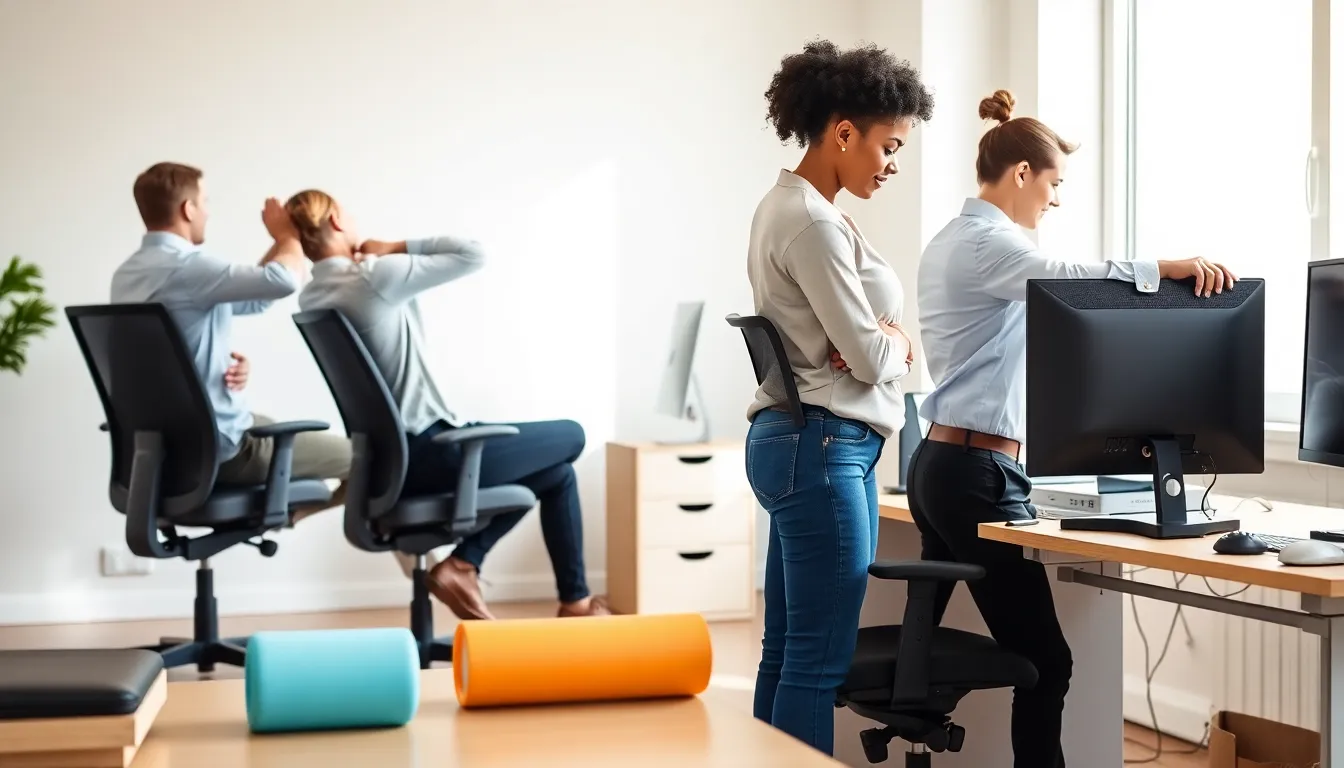
You clock out after another long workday and the first thing you notice is that familiar ache in your lower back. Maybe it's a dull throb between your shoulder blades, or a sharp twinge when you stand up from your desk. If you spend most of your day sitting, you're far from alone in this experience. Back pain after extended work hours has become one of the most common complaints among office workers, remote employees, and anyone who spends significant time at a desk. The good news? You don't need expensive treatments or major lifestyle overhauls to find relief. Simple, practical fixes can make a real difference in how your back feels at the end of each day.
Understanding Why Your Back Hurts After Sitting All Day
Your body wasn't designed to stay in one position for eight hours straight. When you sit for extended periods, several things happen that contribute to back pain. Your hip flexors tighten and shorten, pulling on your lower back. Your core muscles essentially clock out because they're not needed to keep you upright. Meanwhile, your spinal discs compress under constant pressure without the movement they need to stay hydrated and healthy.
Poor posture amplifies all of these issues. When you slouch forward to look at your screen or crane your neck to see your monitor, you're adding extra strain to muscles that are already working overtime. Your upper back rounds, your shoulders roll forward, and your neck juts out. This forward head position is particularly problematic because for every inch your head moves forward from its neutral position, it effectively adds about 10 pounds of extra weight for your neck and upper back muscles to support.

The longer you maintain these positions without breaks, the more your muscles fatigue and stiffen. Blood flow decreases to compressed areas, and metabolic waste products build up in the tissues. By the end of your workday, you're dealing with tight, fatigued muscles that have been fighting against poor positioning for hours. This explains why that pain often feels worse as the day progresses and why you might feel relatively okay in the morning but miserable by evening.
Movement Breaks That Actually Work
Taking regular micro-breaks to stand, stretch, or walk every 30 to 60 minutes can significantly reduce muscle tension and improve circulation, helping to prevent back stiffness. These don't need to be elaborate exercise sessions. Even standing up for two minutes or walking to refill your water bottle counts.
The key is consistency, not duration. Set a timer on your phone or use one of the many apps designed to remind you to move. When the alert goes off, stand up and do something. Walk to the window and back. Do a few shoulder rolls. March in place while you read an email on your phone. The specific activity matters less than the fact that you're changing position and getting blood flowing again.
If you can, incorporate brief walks into your workday beyond these micro-breaks. Take phone calls while walking if your work allows it. Use the restroom on a different floor. Park farther away from the entrance or get off public transit one stop early. These small additions of movement throughout the day add up, and they give your back the variety of positions it needs to stay comfortable.
Some people find success with the Pomodoro Technique, which structures work into 25-minute focused sessions followed by 5-minute breaks. During those breaks, prioritize movement over scrolling through your phone. Your back will thank you, and research suggests these structured breaks can actually improve productivity and focus too.
Setting Up Your Workspace for Better Back Health
Adjusting your workstation to ensure an ergonomic setup, including a proper chair, monitor at eye level, and keyboard placement, is crucial for maintaining good posture and reducing strain on your back. Start with your chair. Your feet should rest flat on the floor with your knees at about a 90-degree angle. If your chair is too high and your feet dangle, use a footrest. The backrest should support the natural curve of your lower back. Many office chairs have lumbar support adjustments, but if yours doesn't, a small pillow or rolled towel can work.
Your monitor position makes a bigger difference than most people realize. The top of your screen should be at or slightly below eye level, and the monitor should sit about an arm's length away. If you use a laptop as your primary computer, this setup is nearly impossible without accessories. Consider getting a laptop stand and external keyboard, or at minimum, prop your laptop on a stable stack of books to raise the screen.
Keyboard and mouse placement affects your shoulders and upper back. Keep both within easy reach so you're not stretching forward repeatedly. Your elbows should stay close to your body, bent at roughly 90 degrees. If you're reaching forward or to the side constantly, you're setting yourself up for pain.
Check your desk height too. When you're typing, your forearms should be roughly parallel to the floor. If your desk is too high, your shoulders will hike up. Too low, and you'll slouch forward. If you can't adjust your desk height, adjust your chair and add a footrest if needed to maintain proper alignment.
Simple Stretches and Exercises for End-of-Day Relief
Incorporating simple stretches like seated spinal twists, hamstring stretches, or hip flexor stretches can help relieve muscle tension and improve flexibility after long periods of sitting. You can do many of these right at your desk, and they take just a few minutes.
For a seated spinal twist, sit up straight in your chair with feet flat on the floor. Place your right hand on the back of your chair and your left hand on your right knee. Gently twist to the right, hold for 15-20 seconds, then repeat on the other side. This releases tension in your mid and lower back while improving spinal mobility.
Hip flexor stretches are essential because these muscles get incredibly tight from prolonged sitting. Stand up and step one foot back into a lunge position. Keep your back knee straight and gently push your hips forward until you feel a stretch in the front of your back hip and thigh. Hold for 20-30 seconds on each side. Tight hip flexors pull on your lower back, so releasing them often provides immediate relief.
For your hamstrings, sit on the edge of your chair and extend one leg straight out with your heel on the floor. Keep your back straight and gently lean forward from your hips until you feel a stretch in the back of your extended leg. Hold for 20-30 seconds, then switch legs. Tight hamstrings can pull your pelvis into a posterior tilt, flattening your lower back curve and causing pain.
The cat-cow stretch is excellent for overall spinal mobility but requires getting on the floor. If you have the space and privacy, get on your hands and knees. Arch your back and look up (cow), then round your spine and tuck your chin (cat). Move slowly between these positions 5-10 times. This gentle movement lubricates the spinal joints and relieves stiffness.
Child's pose offers a deep stretch for your lower back. From hands and knees, sit back on your heels and reach your arms forward, lowering your chest toward the floor. Hold this restful position for 30-60 seconds, breathing deeply. Many people find this particularly soothing after a long day of sitting.
Heat, Ice, and Other Quick Relief Methods
Applying ice to reduce inflammation or heat to relax muscles can offer temporary relief for back pain after workdays. Knowing which to use when makes a difference. If your back pain feels sharp or you can pinpoint a specific sore spot, ice might be your better option. It reduces inflammation and can numb acute pain. Wrap an ice pack in a thin towel and apply it for 15-20 minutes at a time.
Heat works better for general muscle stiffness and tension, which is what most people experience after sitting all day. A heating pad, hot water bottle, or even a warm shower can relax tight muscles and improve blood flow to the area. Apply heat for 15-20 minutes, but never fall asleep with a heating pad on.
Some people get the best results from contrast therapy, alternating between ice and heat. Try ice for 10 minutes, then heat for 10 minutes, repeating the cycle two or three times. This can be particularly effective for stubborn muscle tension.
Beyond temperature therapy, foam rolling can provide significant relief. A foam roller lets you massage your back muscles by using your body weight. Roll slowly over tight areas, pausing on particularly tender spots for 20-30 seconds. Focus on your mid-back and the muscles alongside your spine, but avoid rolling directly on your spine itself.
Over-the-counter anti-inflammatory medications like ibuprofen can help when pain is more intense, but they're not a long-term solution. Use them sparingly and focus on the preventive measures that address the root cause of your pain rather than just masking symptoms.
Quick Takeaways
- Stand up and move every 30 to 60 minutes to prevent muscle stiffness and maintain healthy blood flow throughout your workday
- Position your monitor at eye level and sit with feet flat on the floor to maintain proper posture and reduce strain
- Stretch your hip flexors and hamstrings daily as tight muscles in these areas directly contribute to lower back pain
- Use heat for general muscle tension and ice for sharp, localized pain, applying for 15-20 minutes at a time
- Support your lower back's natural curve with proper lumbar support or a small pillow when sitting
- Take phone calls while walking and add brief movement opportunities throughout your day
- Practice seated spinal twists and other desk stretches to maintain flexibility during work hours
Conclusion
Back pain after long workdays doesn't have to be your new normal. The fixes that work best are often the simplest ones: moving more frequently, setting up your workspace properly, and taking a few minutes to stretch muscles that have been in the same position for too long. You don't need a complete office overhaul or an expensive ergonomic chair, though those things can help. Start with one or two changes that feel manageable. Set a timer to remind you to stand every hour. Adjust your monitor height today. Try one new stretch tonight after work.
Pay attention to what makes your specific back pain better or worse. Everyone's body responds a bit differently, and you might find that certain stretches or adjustments work particularly well for you. The goal isn't perfection but consistent small actions that add up over time. Your back pain developed gradually from repeated positions and habits, and it will improve gradually as you build new, healthier patterns into your workday. Give these strategies a fair trial for a couple of weeks, and you'll likely notice your end-of-day pain decreasing significantly.
FAQs
How long should I hold stretches for back pain relief?
Hold each stretch for 20-30 seconds and repeat 2-3 times on each side. This duration allows your muscles to relax and lengthen without triggering a protective reflex. Stretching should feel like gentle tension, never sharp pain. Breathe normally throughout each stretch rather than holding your breath, which can increase muscle tension.
Is it better to use a standing desk or take sitting breaks?
Both approaches work, but alternating between sitting and standing throughout the day is ideal. If you have access to a standing desk, try standing for 15-20 minutes every hour rather than standing all day, which can cause its own problems with leg and foot fatigue. If you don't have a standing desk, taking regular breaks to stand and walk provides similar benefits for your back.
When should I see a doctor about work-related back pain?
See a doctor if your back pain lasts more than a few weeks despite trying these fixes, if it's getting progressively worse, or if you experience numbness, tingling, or weakness in your legs. Also seek medical attention if your pain started after a specific injury, comes with unexplained weight loss, or is accompanied by fever or loss of bladder control.
Can bad posture permanently damage my back?
While poor posture over many years can contribute to degenerative changes in your spine, most posture-related back pain is reversible with consistent changes to your habits and workspace setup. Your body is remarkably adaptable. Even if you've had poor posture for years, improving it now will reduce your pain and can prevent more serious issues from developing as you age.