Technology has reshaped nearly every corner of modern life, and education is no exception. From the Magic Lantern slide projectors circulating through Chicago public schools in the early 1900s to the AI-powered learning platforms of today, the classroom has undergone a transformation that would have seemed like science fiction just decades ago. Today, digital tools aren't just supplementing traditional teaching - they're fundamentally changing how students learn, how teachers instruct, and how knowledge itself is accessed and shared. Understanding this shift matters because it affects not only current students but also how we prepare the next generation for a world where digital literacy is as essential as reading and writing.
From Chalkboards to Chromebooks: A Brief History
Education technology didn't arrive overnight. The Magic Lantern, an early slide projector, was already being used in classrooms by 1870. By the end of World War I, roughly 8,000 lantern slides were making their rounds through Chicago's public schools, bringing visual learning to students who had previously relied solely on textbooks and lectures.
The real push for educational technology in American schools came during the Cold War. After the Soviet Union launched Sputnik in 1957, the United States responded by formally integrating technology into education to boost math, science, and technical skills. The goal was clear: prepare students to compete in an increasingly technological world.

Fast forward to 2009, and about 97% of U.S. classrooms had one or more computers, with 93% of those connected to the Internet. That translated to approximately one computer for every five students - a far cry from today's one-to-one device programs, but a significant milestone nonetheless. Now in 2026, many schools issue individual tablets or laptops to students, and cloud-based learning platforms have become standard infrastructure.
How Digital Tools Are Changing Learning Outcomes
The impact of technology on student performance isn't just anecdotal. Research shows that students who use digital learning tools demonstrate a 12% improvement in test scores compared to peers learning through traditional methods alone. That's a meaningful difference, especially when scaled across entire school systems.
But what drives this improvement? Digital tools offer several advantages. Adaptive learning software can adjust difficulty levels in real time, ensuring students aren't bored by material that's too easy or frustrated by content that's too hard. Video lessons can be paused, rewound, and reviewed until concepts click. Online collaboration tools let students work together even when they're not in the same room - a capability that proved invaluable during remote learning periods.
Interactive simulations bring abstract concepts to life in ways that textbook diagrams never could. A student learning about planetary motion can manipulate a 3D model of the solar system. Someone studying chemistry can conduct virtual experiments without the safety concerns of a physical lab. These experiences create deeper understanding because they engage multiple senses and allow for experimentation.
Studies examining digital technologies in education consistently point to increased engagement and motivation among students when technology is thoughtfully integrated into curriculum.
The Equity Question: Access and Opportunity
Technology's potential to democratize education is enormous, but it comes with a significant caveat: not everyone has equal access. The digital divide remains a stubborn reality in 2026. While some students attend schools with robust Wi-Fi, personal devices, and tech support staff, others struggle with unreliable internet at home or share a single family computer among siblings.
Rural areas often face connectivity challenges that urban centers don't. Low-income families may not be able to afford the devices or internet plans that schools assume students have at home. When homework assignments require online research or digital submission, students without reliable access fall behind through no fault of their own.
Some districts have addressed this by lending mobile hotspots or devices to families in need. Others partner with local libraries or community centers to provide after-school tech access. But these solutions are patchwork, and the gap persists. Research on digital capacity in schools highlights how infrastructure disparities create fundamentally different educational experiences for students based on geography and socioeconomic status.
There's also a less obvious equity issue: not all teachers receive adequate training in educational technology. A teacher who doesn't feel comfortable with digital tools may avoid using them, meaning their students miss out regardless of what devices sit in the classroom. Professional development and ongoing support are just as important as hardware when it comes to effective tech integration.
The Teacher's Role in a Tech-Enabled Classroom
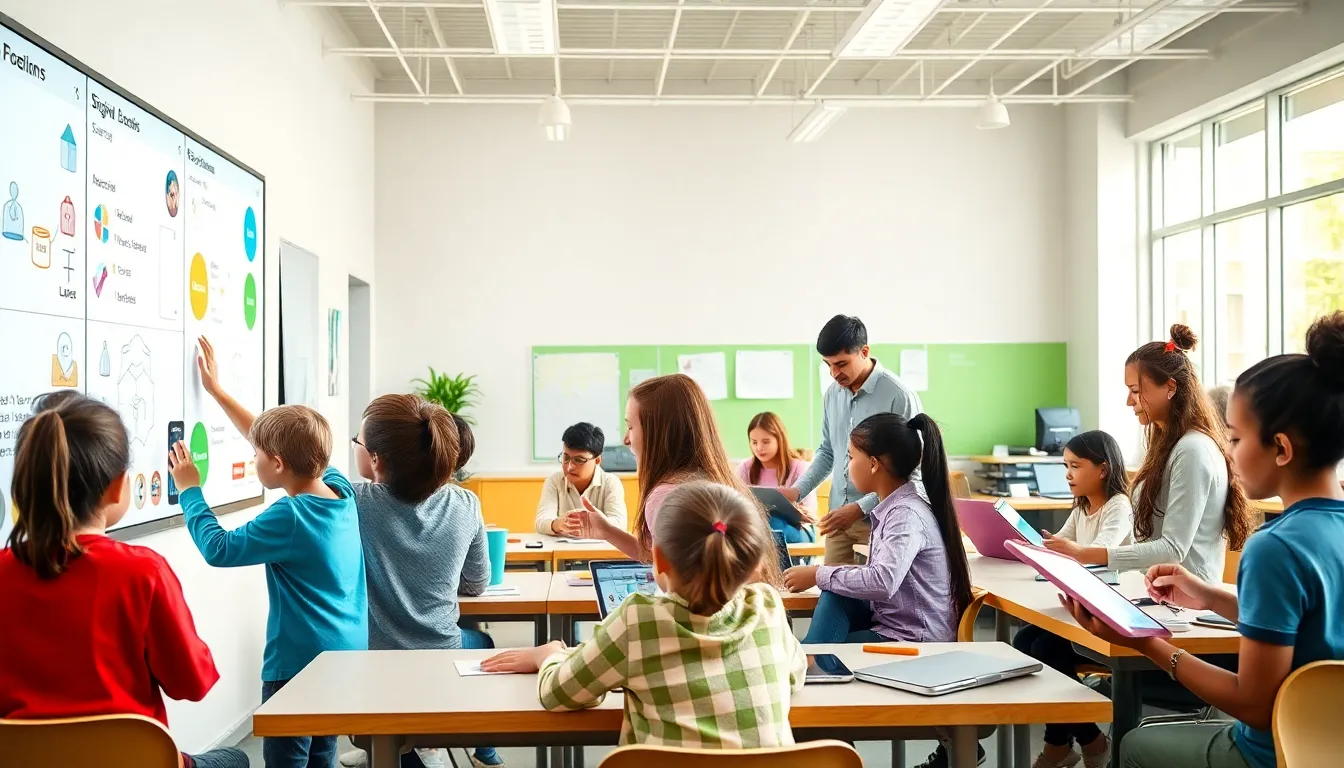
Some feared that technology would replace teachers. That hasn't happened, and it won't. What has changed is what teachers do and how they spend their time. Technology handles certain tasks - like grading multiple-choice assessments or tracking attendance - that once consumed valuable instructional time. This frees teachers to focus on what humans do best: building relationships, facilitating discussions, providing personalized guidance, and helping students develop critical thinking skills.
In a tech-enabled classroom, teachers become less like lecturers and more like coaches. They curate resources, design learning experiences, and intervene when students struggle with particular concepts. Data from learning platforms can alert teachers when a student is falling behind, allowing for earlier intervention than traditional methods might catch.
But this shift requires teachers to develop new skills. They need to evaluate educational apps and websites for quality and alignment with curriculum standards. They must learn to interpret data dashboards and analytics. They have to manage a classroom where students might be working on different activities simultaneously, each at their own pace. It's a different kind of expertise than standing at the front of a room and delivering the same lesson to everyone.
The best implementations of educational technology recognize that teachers remain central to the learning process. Technology is a tool, and like any tool, its effectiveness depends on the skill of the person wielding it. Schools that invest in teacher training and create cultures of experimentation and support see better outcomes than those that simply drop devices in classrooms and hope for the best.
Quick Takeaways
- Educational technology dates back to 1870 with the Magic Lantern, and by the end of WWI, 8,000 lantern slides circulated through Chicago schools alone
- The 1957 Sputnik launch triggered formal integration of technology in U.S. education to strengthen math and science skills
- By 2009, 97% of U.S. classrooms had computers with 93% internet-connected, creating roughly one device per five students
- Students using digital learning tools show a 12% improvement in test scores compared to traditional-only methods
- The digital divide remains a critical equity issue, with access gaps based on geography and family income affecting learning opportunities
- Teachers haven't been replaced by technology - their role has evolved to focus on personalized guidance and critical thinking rather than content delivery
- Effective tech integration requires robust teacher training, not just hardware investment
Conclusion
The impact of technology on education is neither purely positive nor negative - it's complex and ongoing. We've moved far beyond the days when a single classroom computer was a luxury, and we're still figuring out what works best. What's clear is that technology, when implemented thoughtfully with attention to equity and strong teacher support, can enhance learning in measurable ways. The 12% improvement in test scores for students using digital tools is significant, but the real promise lies in preparing students for a world where digital fluency is essential.
The challenge ahead isn't about adding more devices or the latest apps. It's about ensuring every student has access to quality digital learning experiences, every teacher has the training and support needed to use technology effectively, and we remain focused on the goal: helping students learn, think, and grow. Technology should serve education, not the other way around. When we get that balance right, the results speak for themselves.
FAQs
How does technology improve student engagement in the classroom?
Technology increases engagement by offering interactive, personalized learning experiences. Students can learn at their own pace, access multimedia content that matches their learning style, and receive immediate feedback. Gamified learning platforms and virtual simulations make abstract concepts tangible and interesting, keeping students motivated in ways traditional lectures often struggle to achieve.
What are the main challenges schools face when implementing educational technology?
The primary challenges include funding for devices and infrastructure, ensuring equitable access for all students regardless of socioeconomic status, providing adequate teacher training, maintaining and updating equipment, and selecting quality educational software from an overwhelming number of options. Many schools also struggle with reliable internet connectivity, particularly in rural areas.
Can technology replace traditional teaching methods entirely?
No, technology works best as a supplement to, not a replacement for, traditional teaching. While digital tools can handle certain tasks like content delivery and assessment, teachers remain essential for building relationships, facilitating discussions, developing critical thinking, and providing the human connection and mentorship that students need. The most effective approach combines technology with traditional methods.
How can parents support their children's technology-based learning at home?
Parents can help by ensuring a quiet space for online learning, monitoring screen time to maintain healthy balance, encouraging kids to ask questions when they don't understand digital assignments, communicating with teachers about tech issues, and learning alongside their children when possible. It's also important to teach digital citizenship and safe online behavior as part of technology use.