Your inbox gets hundreds of emails a week, but only a handful make you stop and click. The ones that work? They show up at the right time, say something useful, and feel like they know you. That's the magic behind email automation for e-commerce. While acquiring a new customer can cost five times more than keeping an existing one, most online stores watch seven out of ten first-time buyers walk away and never return. The fix isn't complicated marketing wizardry. It's about setting up simple, automated email flows that guide shoppers back to your store when they're most likely to buy again.
Why Email Flows Turn One-Time Shoppers Into Regular Customers
Repeat buyers are worth chasing because they spend significantly more than newcomers. Research shows repeat customers spend 67% more than first-time buyers, and they already trust you enough to have handed over their credit card once. The challenge is that the average e-commerce store converts only about 28.2% of customers into repeat buyers. That means most stores are leaving money on the table simply because they're not staying in touch.
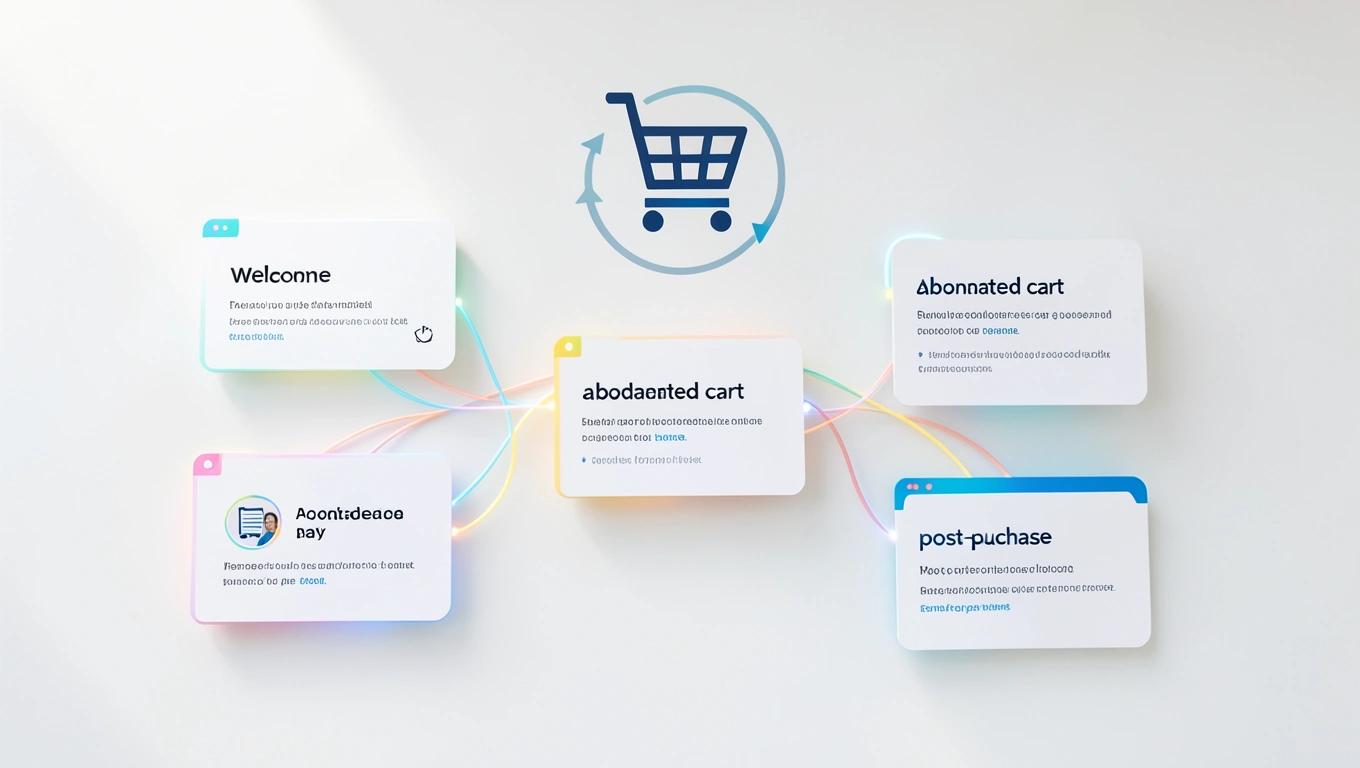
Automated email flows work because they reach people when attention and intent are both high. A welcome series lands right after someone signs up or makes their first purchase, when they're actively thinking about your brand. An abandoned cart sequence catches shoppers who were seconds away from buying but got distracted. A post-purchase flow arrives when customers are evaluating their decision and deciding whether to come back.
These aren't broadcast emails sent to everyone at once. They're triggered by specific actions, so the timing feels personal even though the system runs itself. Set them up once, and they keep working in the background while you focus on other parts of your business. The key is knowing which flows to build first and what to say in each one.
The Three Email Flows That Generate the Most Repeat Business
Not all automated sequences are created equal. Some drive more revenue and engagement than others, and if you're just getting started, these three should be at the top of your list.
Welcome flows are often the highest-performing automated sequences in email marketing. They have an average open rate of 35.53% and a conversion rate of 2.11%, which beats most other email types. This is your chance to make a strong first impression, set expectations, and give new subscribers or customers a reason to engage. A three-email welcome series works well: the first email thanks them and introduces your brand story, the second shares your best-selling products or customer favorites, and the third offers a small incentive to make their next purchase.
Abandoned cart flows are revenue machines. A single abandoned cart email can bring back a meaningful chunk of lost sales, but a series of three emails can yield 6.5 times more revenue than sending just one. The first email should go out within an hour and gently remind the shopper what they left behind. The second, sent a day later, can highlight product benefits or include a customer review. The third, sent after another day or two, might include a time-sensitive discount or free shipping offer to create urgency.
Post-purchase flows keep customers engaged after they buy. This is where most stores drop the ball. Send a thank-you email immediately, then follow up a few days later asking how they like the product. A week or two after delivery, suggest complementary items or invite them to leave a review. This flow builds trust and keeps your brand top of mind when they're ready to buy again.
Choosing the Right Platform Without Overpaying
You don't need enterprise software to build effective email flows. Several platforms offer automation tools that work for small and growing stores, and pricing varies based on how many contacts you have.
Klaviyo is an AI-first CRM and marketing automation platform that unifies email, SMS, WhatsApp, and more to build data-driven customer relationships. It offers a free plan for up to 250 active profiles and 500 monthly email sends, which is enough to test your first flows. Paid plans start around $20 per month for the Email plan at 500 active profiles, with pricing scaling based on active profiles and usage. If you're serious about e-commerce and want deep integration with platforms like Shopify, Klaviyo is built for that.
Mailchimp offers a free plan for up to 250 contacts and 500 emails per month, making it easy to start without spending anything. Paid plans start at $13 per month for the Essentials plan and $20 per month for the Standard plan, both for 500 contacts. At 10,000 contacts, the Standard plan costs approximately $135 per month. Mailchimp charges for contacts held, not emails sent, so inactive contacts still count toward your bill. It's a good choice if you want a familiar interface and don't need the most advanced segmentation.
ActiveCampaign focuses on marketing automation and CRM software with various plans, including Starter, Plus, Pro, and Enterprise. Pricing starts at $15 per month for 1,000 contacts on the Starter plan when billed yearly. There's no free plan, only a 14-day free trial. At 10,000 contacts, the Plus plan costs $239 per month and the Professional plan costs $419 per month with yearly billing. ActiveCampaign shines if you want powerful automation logic and lead scoring, but it has a steeper learning curve than the other two.
All three platforms let you build the core flows you need. The right choice depends on your budget, list size, and how much time you want to spend learning the tool. If you're just starting, pick the one with a free plan and test your first sequence before committing to a paid tier.
Writing Emails That Feel Human, Not Automated
People can smell a robotic email from a mile away. Even though your flows are automated, they should sound like a real person is talking. Use your brand voice consistently, whether that's casual and funny or polished and professional. Address common questions and objections upfront. If someone abandoned a cart, maybe they were unsure about sizing or shipping costs. Address it directly in the email.
Keep subject lines short and specific. "You left something behind" works better than "Complete your purchase now!" because it's conversational and doesn't feel pushy. In the body, use the customer's first name if you have it, but don't overdo personalization to the point where it feels creepy. One mention is enough.
Visuals matter, but don't go overboard. Include a clear product image in abandoned cart emails so people remember what they were looking at. In welcome and post-purchase flows, a simple layout with one or two images keeps the focus on your message. Every email should have one clear call to action. If you're asking someone to come back and complete their order, don't also ask them to follow you on Instagram and sign up for a loyalty program. One goal per email keeps things simple and improves click-through rates.
Test your emails before you turn them on. Send them to yourself and open them on your phone. Most people check email on mobile, so if your layout breaks or your button is too small to tap, you'll lose conversions. Make sure links work and images load quickly.
Quick Takeaways
- Welcome flows have an average open rate of 35.53% and a conversion rate of 2.11%, making them the highest-performing automated sequences.
- A series of three abandoned cart emails can generate 6.5 times more revenue than sending just one.
- Repeat customers spend 67% more than first-time buyers, but the average e-commerce store converts only about 28.2% of customers into repeat buyers.
- Klaviyo offers a free plan for up to 250 active profiles and 500 monthly email sends, with paid plans starting around $20 per month.
- Mailchimp's free plan covers up to 250 contacts and 500 emails per month, with paid plans starting at $13 per month.
- ActiveCampaign pricing starts at $15 per month for 1,000 contacts on the Starter plan when billed yearly, with no free plan available.
- Acquiring a new customer can cost five times more than retaining an existing one.
Conclusion
Building repeat buyers doesn't require a massive marketing budget or a team of specialists. It requires showing up at the right moments with messages that feel relevant and helpful. Automated email flows do the heavy lifting once you set them up, working around the clock to bring customers back when they're ready to buy again. Start with a welcome series, an abandoned cart sequence, and a post-purchase flow. Pick a platform that fits your current list size and budget, then focus on writing emails that sound like you, not a robot. The stores that win long-term aren't the ones chasing new customers every month. They're the ones that turn first-time buyers into regulars, and email automation is the simplest way to make that happen. Set it up now, and you'll see the results compounding over the next few months.
FAQs
How many emails should I include in an abandoned cart flow?
Three emails work best for most stores. The first should go out within an hour, the second after 24 hours, and the third after 48 to 72 hours. Each email should add something new, like a customer review, product benefit, or limited-time offer. Sending more than three can feel pushy and may hurt your sender reputation if people start marking your emails as spam.
Can I use the same email platform for both email and SMS?
Some platforms handle both, while others focus on email only. Klaviyo unifies email, SMS, and WhatsApp in one platform, which makes it easier to coordinate messages across channels. Mailchimp added SMS features but it's primarily an email tool. ActiveCampaign also supports SMS but requires separate setup. If you plan to use SMS heavily, check whether your platform includes it or charges extra before committing.
What's the best time to send a welcome email after someone subscribes?
Immediately. The moment someone signs up or makes their first purchase is when they're paying the most attention to your brand. Set your welcome email to trigger instantly so it lands in their inbox while they're still engaged. If you wait hours or days, they may forget about you or lose interest, and your open rates will drop.
Do I need a discount code in every automated email?
No, and offering one too often can train customers to wait for a deal instead of buying at full price. Use discounts strategically, like in the final abandoned cart email or as a thank-you in a welcome series. Post-purchase emails should focus on building the relationship and suggesting complementary products, not discounting everything. Save your best offers for specific goals, and test whether emails without discounts still perform well.